Key Takeaways
- SEO in 2026 is user- and AI-focused: Modern SEO prioritizes user intent, semantic relevance, and helpful, human-first content to drive organic traffic .
- Content experience and authority matter most: High-quality, engaging content combined with brand authority and backlinks boosts search rankings.
- Technical and local SEO are essential: Fast, mobile-friendly websites with structured data and optimized local signals improve visibility in search results.
- Organic traffic growth requires measurement and adaptation: Monitoring metrics like engagement, CTR, and keyword performance helps refine SEO strategies for sustained traffic.
Table of Contents
Search is changing fast, but one thing stays the same: SEO is still one of the most powerful ways to grow organic traffic. In 2026, search engines rely heavily on AI, semantic search, user intent, and trust signals. Businesses that understand modern SEO can earn consistent, high-quality traffic without paying for every click.
In this guide, you’ll learn how SEO increases organic traffic in 2026, what strategies work now, and how to adapt your content for AI-powered search engines, using clear, simple language that’s easy to follow.
What Is SEO in 2026?
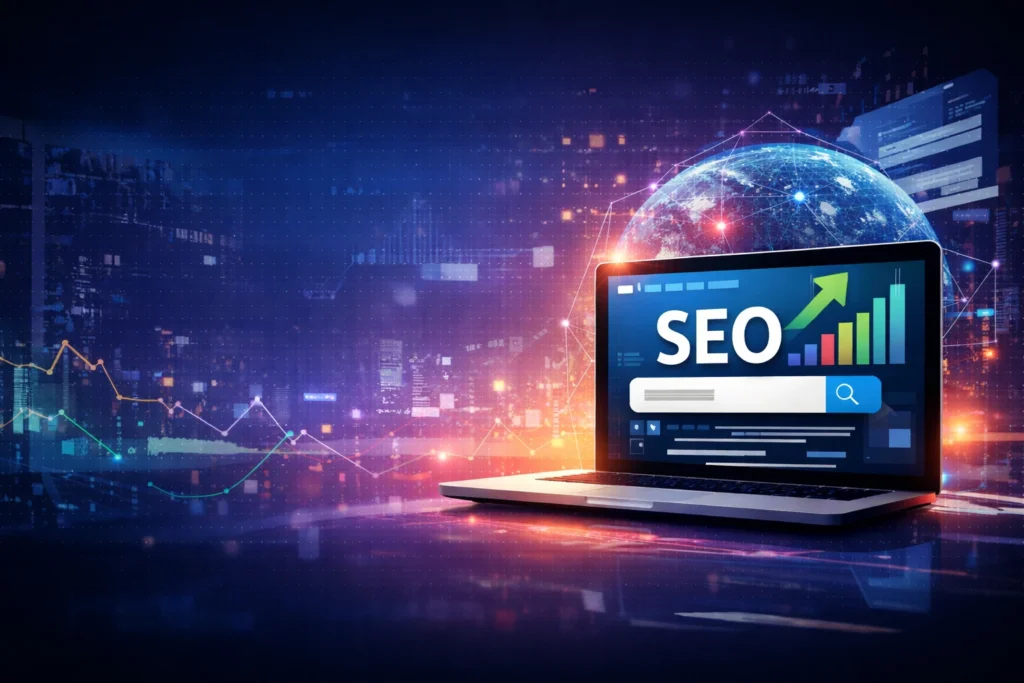
SEO (Search Engine Optimization) in 2026 focuses on helping search engines and users clearly understand your content. It goes beyond keywords. Modern SEO combines:
- AI SEO and machine learning
- Semantic search and entities
- User intent optimization
- Helpful, experience-based content
- Technical SEO and performance
Search engines like Google now evaluate meaning, context, and usefulness, not just exact-match keywords. If your content solves real problems and shows expertise, SEO rewards you with higher rankings and more organic search traffic.
Why Organic Traffic Still Matters in 2026
Organic traffic remains critical for long-term growth. Here’s why businesses still invest in SEO:
- Sustainable traffic: SEO brings unpaid traffic month after month
- Higher trust: Users trust organic results more than ads
- Better ROI: SEO costs less over time than paid advertising
- Qualified visitors: Organic search attracts users with clear intent
Paid ads stop when your budget ends. SEO keeps working, especially when your content ranks for relevant keywords.
How SEO Increases Organic Traffic in 2026
SEO increases organic traffic by aligning your website with how people search today. Let’s break it down.
Search Intent Optimization
User intent SEO is the foundation of modern rankings. In 2026, search engines prioritize content that matches what users truly want.
There are three main search intents:
- Informational: Users want answers or guidance
- Navigational: Users want a specific brand or page
- Transactional: Users want to buy or take action
When you match content to intent, users stay longer, engage more, and click deeper. These signals tell search engines your page deserves higher visibility, driving more organic traffic.
AI-Optimized Content Creation
Semantic search allows search engines to understand relationships between topics. Instead of ranking pages for a single keyword, Google now ranks websites based on topical authority.
When you naturally include related keywords such as modern SEO, AI search, organic traffic growth, and user experience SEO, search engines see your content as complete and relevant. This approach helps pages rank for multiple related searches, leading to steady organic traffic growth.
Semantic SEO and Topic Clusters
Search engines now use semantic search to understand relationships between topics.
Instead of targeting one keyword, SEO uses:
- Related keywords
- Entities
- Topic clusters
For example, a page about “SEO in 2026” naturally includes:
- modern SEO
- AI search
- organic traffic growth
- user experience SEO
- technical SEO
This approach builds topical authority, helping your site rank for many related queries and increasing total organic traffic.
Role of Google AI, SGE, and Voice Search
Google’s Search Generative Experience has changed how users interact with results. AI-generated summaries often appear before traditional listings, but SEO still plays a key role in feeding those answers.
Clear structure, conversational language, and direct responses improve visibility in AI-driven search results. Voice search also continues to grow, especially on mobile devices. Since people speak in natural questions, SEO content must sound natural and conversational to match voice queries.
Technical SEO That Drives Organic Traffic
Technical SEO remains a strong ranking factor in 2026. Even the best content fails if search engines can’t crawl or load your site properly.
Key technical SEO elements include:
- Fast page speed
- Mobile-first indexing
- Clean site structure
- Secure HTTPS
- Core Web Vitals optimization
Structured data and schema markup also help search engines understand your content better, increasing chances of rich results and higher click-through rates.
Content Experience and UX Signals
SEO now measures how users interact with content. This is called content experience SEO.
Important UX signals include:
- Dwell time
- Bounce rate
- Scroll depth
- Mobile usability
- Accessibility
To improve engagement:
- Use short paragraphs
- Write simple sentences
- Add clear headings
- Keep a logical flow
When users enjoy reading your content, search engines reward you with better rankings and more organic search traffic.
Link Building and Brand Authority in 2026
Backlinks still matter, but SEO in 2026 values credibility over volume. Search engines now recognize brand mentions, authority signals, and digital PR alongside traditional links.
When reputable websites reference your content or brand, trust increases. Strong brand authority helps content rank faster and more consistently, leading to higher organic traffic over time.
Local SEO and Personalized Search Results
Personalized search results continue to influence organic traffic. Location, device type, and user behavior shape what people see in search.
Local SEO helps businesses appear in relevant searches by optimizing location-based signals. Accurate business information, local content, and positive reviews all contribute to better visibility in local organic results.
Measuring Organic Traffic Growth from SEO
You must track results to improve SEO performance.
Key SEO metrics include:
- Organic traffic (GA4)
- Keyword visibility
- Click-through rate (CTR)
- Engagement metrics
- Conversions from organic search
Google Search Console shows how users find your site, while GA4 tracks user behavior. Together, they reveal how SEO increases business revenue over time.
Common SEO Mistakes That Limit Organic Traffic
Avoid these outdated SEO mistakes in 2026:
- Keyword stuffing
- Publishing thin content
- Using AI without human editing
- Ignoring user intent
- Neglecting UX and technical SEO
These mistakes reduce trust, rankings, and organic traffic growth.
Future SEO Trends That Will Increase Organic Traffic
SEO continues to move toward trust, experience, and multimodal search. Text, voice, images, and video all play a role in how users search. Websites that focus on real experience, transparent information, and helpful content will gain stronger organic visibility.
Final Thoughts: Is SEO Still Worth It in 2026?
Yes, SEO is more valuable than ever.
While search engines use AI, they still need high-quality content to deliver accurate results. SEO increases organic traffic by aligning your content with user intent, experience, authority, and performance.
If you want long-term, scalable growth, SEO remains one of the smartest digital strategies in 2026.
Ready to Increase Your Organic Traffic in 2026?
Start with:
- Intent-based content
- Semantic SEO
- Strong technical foundations
- Trust and experience-driven writing
When you follow modern SEO best practices, organic traffic follows naturally, and sustainably.
Frequently Asked Questions
What is SEO in 2026 and why is it important?
SEO in 2026 focuses on user intent, AI-optimized content, semantic search, and content authority. It’s important because it helps websites attract sustainable organic traffic, build trust, and stay visible in AI-driven search results.
How does SEO improve organic traffic?
SEO improves organic traffic by aligning content with user intent, optimizing for AI search, enhancing user experience, and building topical authority through relevant content and quality backlinks.
What role does AI and Google SGE play in modern SEO?
AI and Google’s Search Generative Experience (SGE) impact how content appears in search results. Optimizing for AI-driven and conversational search ensures your content is selected for summaries, voice search, and featured snippets, increasing organic traffic.
Do technical SEO and site performance still affect rankings?
Yes. Fast page speed, mobile-first design, clean site structure, and proper schema markup remain crucial. Technical SEO ensures search engines can crawl, index, and rank content effectively.
How can local SEO increase organic traffic in 2026?
Local SEO improves visibility in location-specific searches. Optimizing Google Business Profile, using local keywords, and maintaining accurate contact information helps businesses attract nearby customers and boost local organic traffic.
What are common SEO mistakes to avoid in 2026?
A6: Avoid keyword stuffing, thin or AI-only content, ignoring user intent, and neglecting UX or technical SEO. Modern SEO rewards helpful, high-quality content that engages users.